
muscle as medicine 💪
If I could recommend one intervention that protects your heart, regulates your blood sugar, supports your brain, strengthens your bones, and predicts how independently you'll live into your later decades, it would be building and maintaining muscle mass.
Muscle is one of the most metabolically active and protective tissues in the entire body. It functions more like an organ than a structure. It secretes signaling molecules, regulates blood sugar, supports your bones, and is one of the strongest predictors of how well you'll age. If you're not actively thinking about building and preserving muscle, now is a fabulous time to start.
Why? Read on...
we lose muscle as we age
Sarcopenia is the medical term for age-related muscle loss. Some degree of muscle loss is expected as we age; we lose between 3 and 8% of muscle mass per decade starting around age 30. Sarcopenia represents the excessive end of that loss, where the decline goes well beyond what the body should experience with healthy aging. It affects roughly 10-30% of adults over 60, and in older populations it is strongly associated with an increased risk of falls, fractures, hospitalization, and early death.
The loss of muscle isn't more than just about losing strength. It's also about your independence! Whether you can get up off the floor, carry your groceries, or travel comfortably in your 70s and 80s has a lot to do with the muscle you're building (or not building) right now.
muscle and blood sugar regulation
Skeletal muscle is the primary site of glucose disposal in the body. After you eat a meal, the majority of that blood sugar needs somewhere to go, and muscle tissue is where most of it lands.
More muscle = lower blood sugar!
Decreased muscle mass means there's less capacity to absorb glucose from the blood stream. Overtime, this will contribute to chronically elevated blood sugar, insulin resistance, and eventually metabolic syndrome and diabetes.
A single session of resistance training can improve insulin sensitivty for up to 24 hours. And regular strength training creates lasting improvements that compound over time. This is one of the most direct, evidence-based interventions for metabolic health. No medications needed.
muscle is an endocrine organ
Muscle affects your hormones! What?
When muscle tissue contracts, it reelases chemical messengers called myokines. These molecules travel throughout the body and have profound effects on inflammation, immune function, brain health, and metabolism. One of the most studied myokines is irisin, which supports fat metabolism, improves mood, and appears to be protective against cognitive decline.
In other words, your muscles are doing far more than simply contracting when you move.
grip strength
Grip strength is a popular longevity biomarker. It's worth understanding what it actually measures: grip strength is a reliable proxy for total body muscle strength and quality, not just the strength of your hands. It reflects the overall integrity of your musculoskeletal system, which is why it predicts so much more than your ability to open a jar.
Research consistently shows that grip strength is associated with cardiovascular health, cognitive function, and all-cause mortality risk. The PURE study (a large longitudinal study across 17 countries with nearly 140,000 participants) found that grip strength was a stronger predictor of both all-cause and cardiovascular mortality than blood pressure. The cognitive connection is well-documented too, with multiple large studies linking lower grip strength to faster cognitive decline and higher dementia risk.
Inside The Shift, I walk members through how to test, track, and strengthen their grip strength at home - no fancy equipment required.
bone density & fall prevention
Muscle and bone health are deeply connected. Strong muscles generate force against bones, which stimulates bone formation and increases density over time. This matters enormously as we age, because falls are one of the leading causes of death in adults over 65. The risk of a fall being catastrophic goes up dramatically when bone density is low.
This is not a problem to address at 70. It's a problem to prevent in your 40s, 50s, and 60s.
now let's talk about protein
I often hear clients talking about feeling frustrated with their body composition. They feel soft, like they're losing definition, or can't seem to shift their weight. They expect me to recommend cutting calories, but I almost never do.
The missing piece, more often than not, is protein. Not enough of it, not consistently, and not the right kind.
Muscle requires protein to build and maintain itself. When we undereat protein, the body has no raw material to work with, no matter how much strength training you do. And as we age, our protein requirements actually go up, not down, because our bodies become less efficient at utilizing it.
what I mean by protein (and what I don't)
Walk through any grocery store right now and you'll find protein chips, protein candy, protein cookies, protein popcorn, protein soda?! This is not real food. This is ultraprocessed food-like-substance aka FRANKENFOOD. These highly processed foods engineered to hit a protein number on a label are not what I'm talking about.
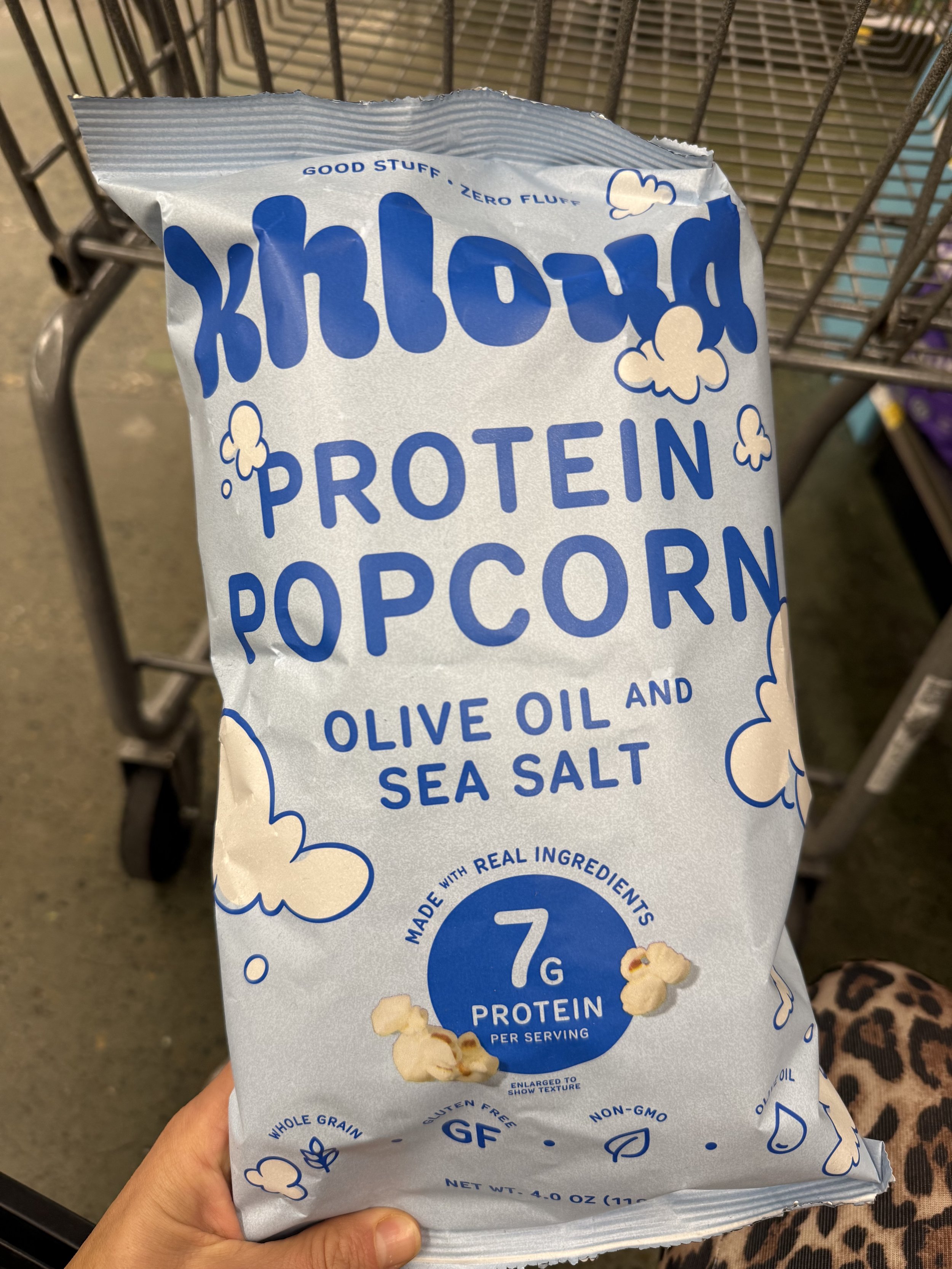
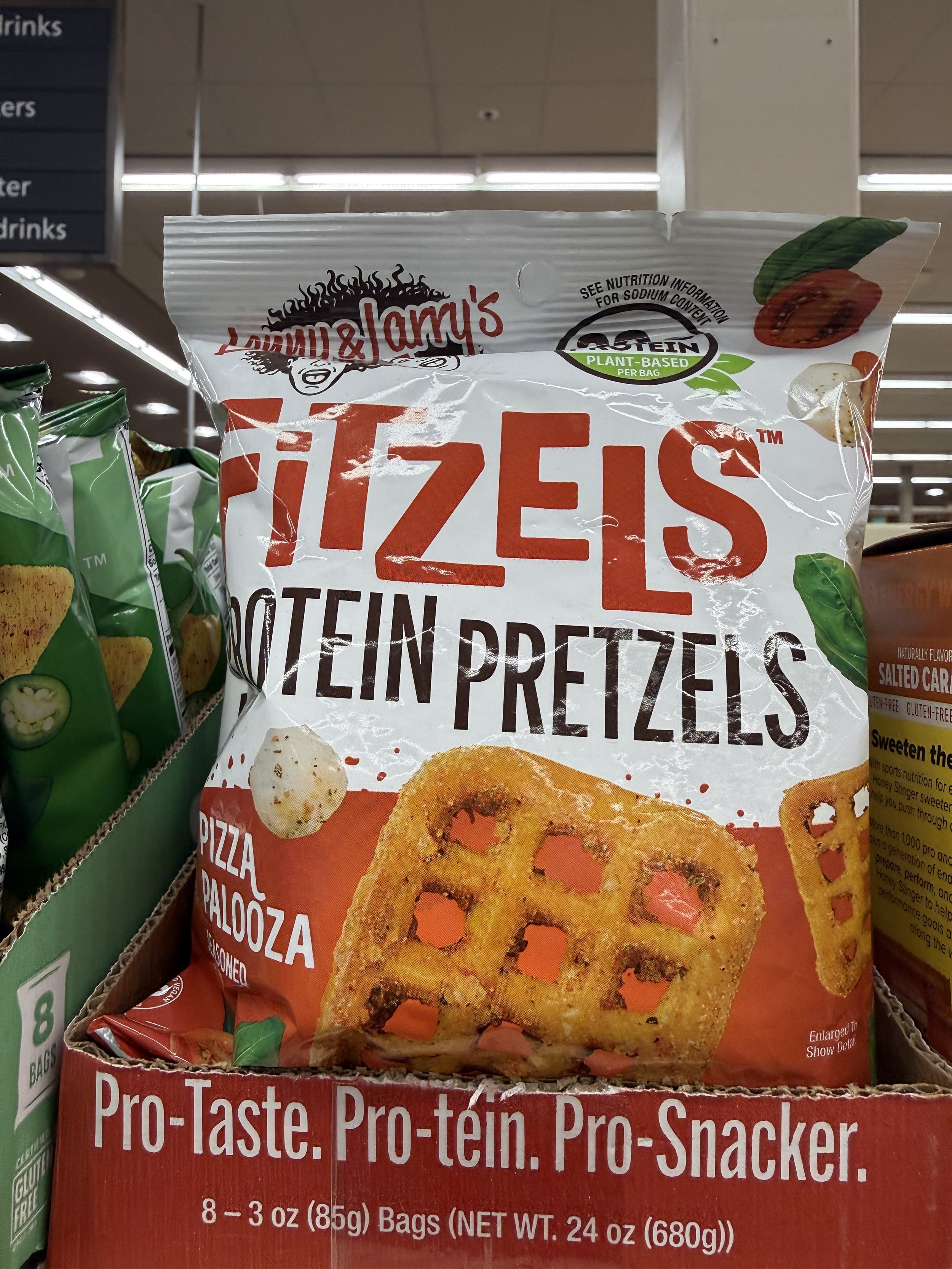
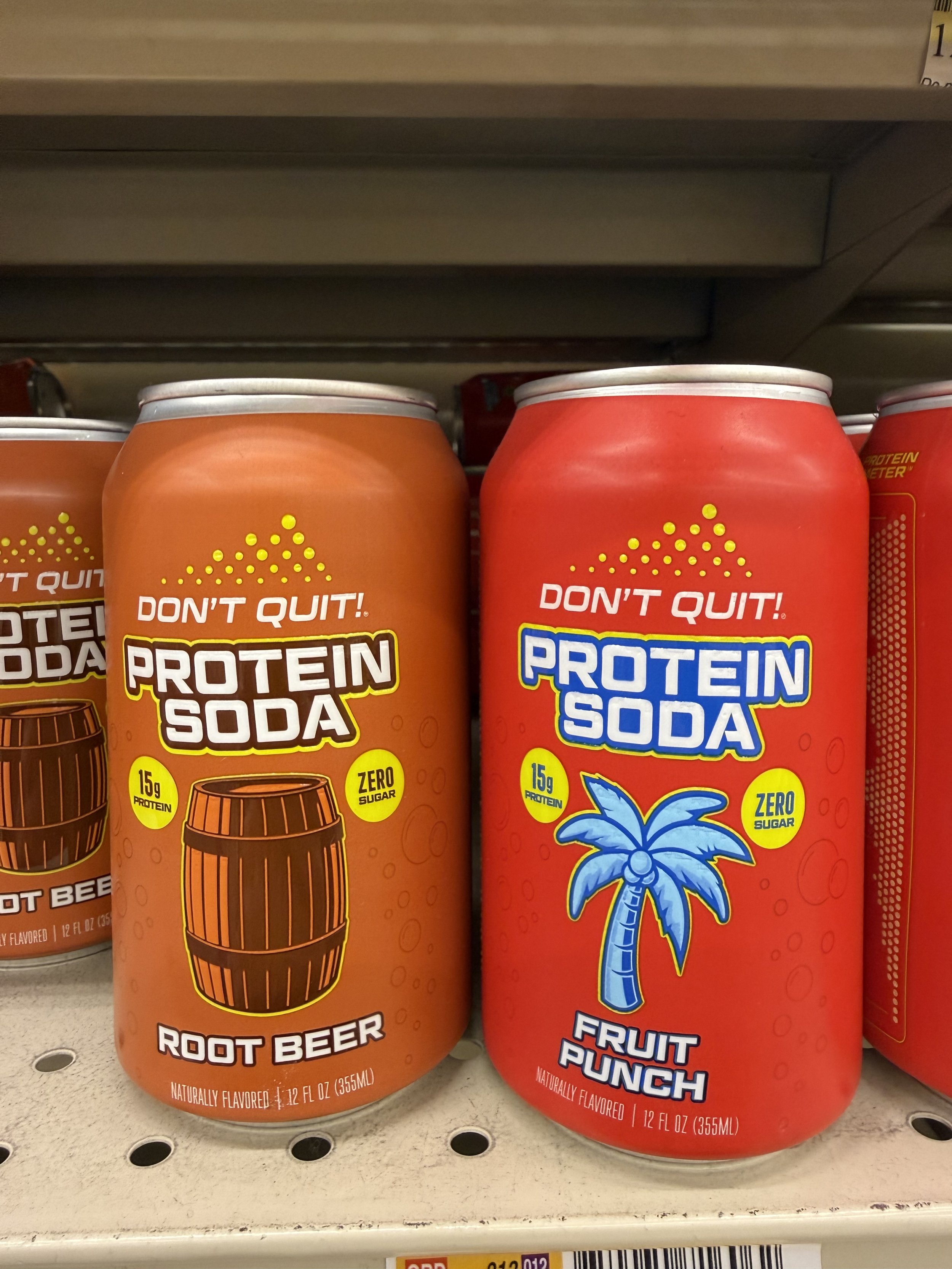
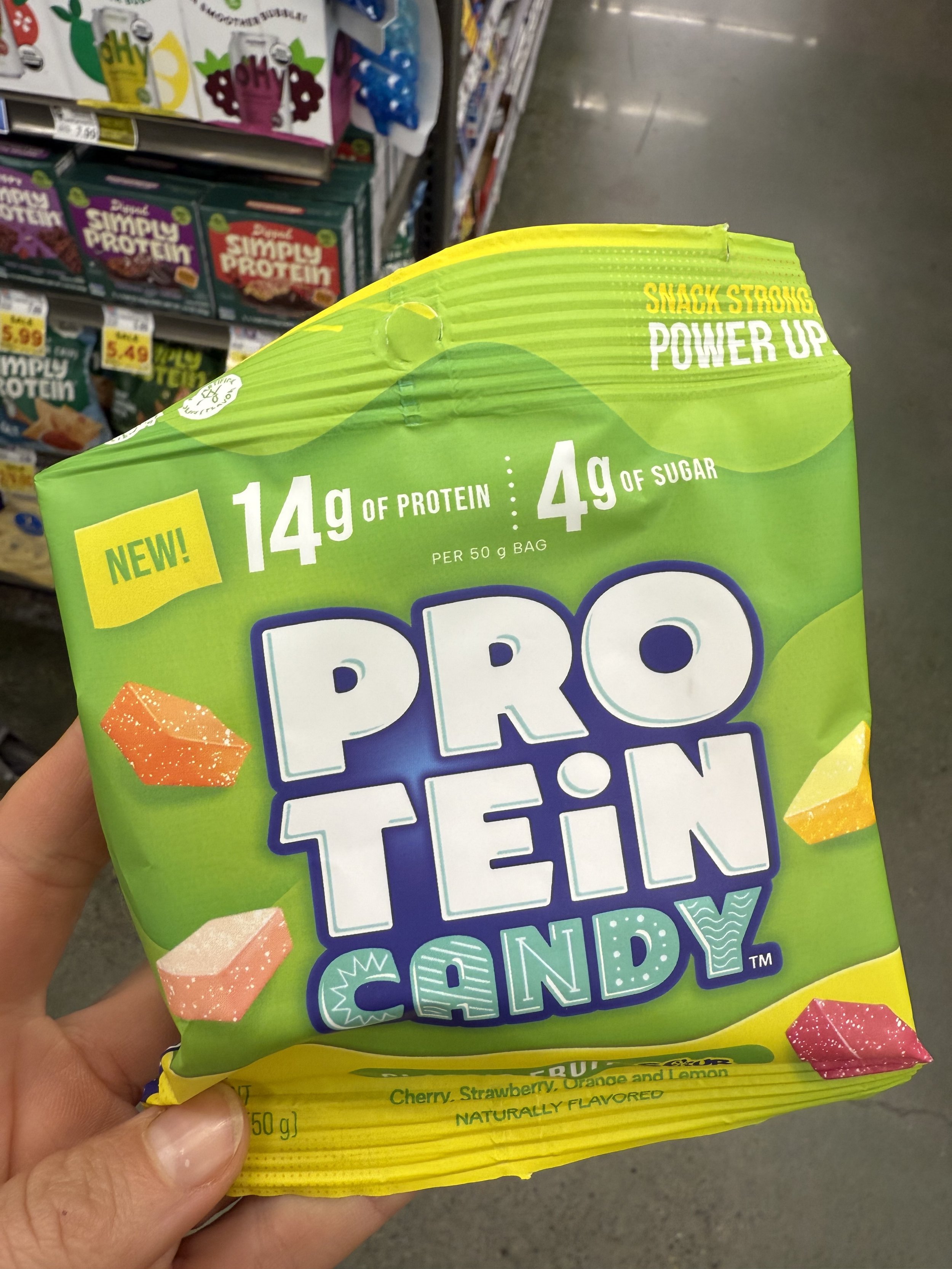
^ this is NOT what I mean when I say "eat more protein"
Instead, real food protein looks like eggs, fish, poultry, grass-fed meat, legumes, tempeh, edamame, grass-fed dairy (for some).
Whole food protein is always the goal. That said, I know that consistently meeting your recommended protein daily goal can feel like a lot, especially if your appetite is smaller or your schedule is demanding. This is where a high-quality protein powder can help fill the gap. The key word is quality. Many powders on the market are full of sugar, artificial sweeteners, and fillers that undermine the whole point.
Here's a list of my favorite protein powders. These are what I use and recommend to clients - clean ingredients you can pronounce, good amino acid profiles, and they taste pretty good.
a word on rest
While I am always talking to my clients about all the benefits of movement, you can have too much of a good thing. Overtraining is real. We live in a culture that treats doing more as a virtue, and the fitness world is no exception. More workouts, more intensity, more output. But overtraining works directly against the longevity goals we're trying to achieve.
When the body doesn't have adequate time to recover between sessions, cortisol stays elevated, inflammation increases, muscle tissue breaks down faster than it can rebuild, and injury risk climbs. The adaptations you're working toward (increased muscle mass, better metabolic health, improved cardiovascular function, etc.) happen during recovery, not during the workout itself. The workout is the stimulus. Rest is where the body responds.
This applies beyond exercise too. Rest, in the broader sense, is one of the most underrated longevity tools we have. Sleep, recovery days, periods of low demand, silence, stilllness. These ≠ laziness! They are all so important. In my clinical work, some of the most exhausted, inflamed, and metabolically dysregulated people I see are also the ones pushing the hardest.
For most people, 2-3 strength sessions per week with adequate recovery between them is enough to produce meaningful results. You do not need to earn your rest days.
The muscle that manages your blood sugar, protects your bones, signals your brain, and carries you into your 80s is built in the recovery just as much as the workout.
muscle as medicine inside The Shift
Month 6 of my 12-month longevity course is dedicated entirely to movement. Members are diving into the science behind muscle as medicine and translating it into a sustainable practice built around my four-pillar movement framework, personalized templates that fit real life, and a simple pre-workout tool called the "TEMPS Check" that helps you listen to what your body actually needs before you train. The philosophy throughout is consistency and joy over perfection and punishment, because that's what actually works over decades. If that sounds like something you're ready for, I'd love to have you join us. Click here for more info.
